My Selfie with Paulo Freire; or, Honest Work

A well-known pop star once said to me about his own music that it would be popular for about a year; maybe, if he was lucky, two years. But then people would get tired of it. There would be other songs, other musicians, other hit tunes. The market for pop music never really dries up, but the interest in a single song or a collection of single songs wanes. People move on. If you’re a celebrity, you have to draw them back to you; or, better, get ahead of them; and at the very least, move with them. But you keep doing it because making people smile, or cry, or dance is worth it.
For someone with millions of fans and wealth beyond my imagining, I found his humility about his work noteworthy and not a little remarkable.
At the time, I was working as an adjunct community college teacher, always just narrowly avoiding poverty. I was writing nascently about critical digital pedagogy on a long-defunct blog that I called “Slam Teaching,” after slam poetry. Working seven days a week, teaching a 6-6-4 load, and chairing the English Program, maybe I cleared $45,000 each year.
It was honest work.
All whilst I sometimes stayed at this pop star’s house, in the guest wing. I attended a party where there were mermaids in the swimming pool; and Ed Helms, sitting to my right, had nothing to say to me when he found out I was a teacher; and Ted Danson and Mary Steenburgen sat near me at the fire pit and we three stared into the flames, quietly retreating from the hubbub—the weird fruits of my friend’s labour.
Of his honest work.
Musical celebrity spins on the axis of popularity which spins on the axis of wealth (within an industry that fuels a dependency on the promise of both), so much so that the desire to simply make people smile, cry, or dance can get very very lost in the mix.
For more than two decades, I kept at the labour of teaching, and writing about teaching. I did it in part because it was the path I chose. I had tried other paths—advertising copywriting, writing fiction, offering people spiritual guidance, massage therapy; I even once stood behind the camera of a fairly doomed but ever so well-intentioned documentary about Michael Jackson. But I ended up teaching, and mostly by accident.
It didn’t always feel like honest work, trying to weave something meaningful in an LMS classroom laced with Bloom’s Taxonomy and surveilled by instructional designers who actually believed in ADDIE, in alignment of assessments and learning objectives (in learning objectives at all), and where grades were the final say in a student’s relationship to learning. I felt a substantial part of my job was simply to protect students from the system that sought to operationalize them.
Education spins on the axis of reputation which spins on the axis of influence (within a field that fuels a dependency on the promise of both), so much so that the desire to simply help people learn, discover, or imagine can get very very lost in the mix.
It was out of that work that my own critical digital pedagogy grew: the dishonesty and dehumanization of online education in 2005… which by and large—exhaustingly—continues today. The honest work of education wasn’t in the content or the achievement or even in the relationships I tried to build through the screen; the honest work of education was helping students see that most of education isn’t honest work. And then helping them to thrive regardless.
Jeppe Stricker writes in “The Gravity of the Present” that
we picture what the university could become, and almost immediately, the present pulls our imagination back to earth. We envisage better lectures instead of asking whether the lecture should survive at all … the present has gravity, and like all gravity it works invisibly - bending the trajectory of every idea back toward what already exists.
In my 20 years doing critical digital pedagogy, I tried to prove that very idea wrong. I wanted to inspire a struggle against the entropy of the academy, to help people see things, as Maxine Greene always reminds me, as they might be otherwise. I had no interest in the way things were (are), I had an interest in what they could be.
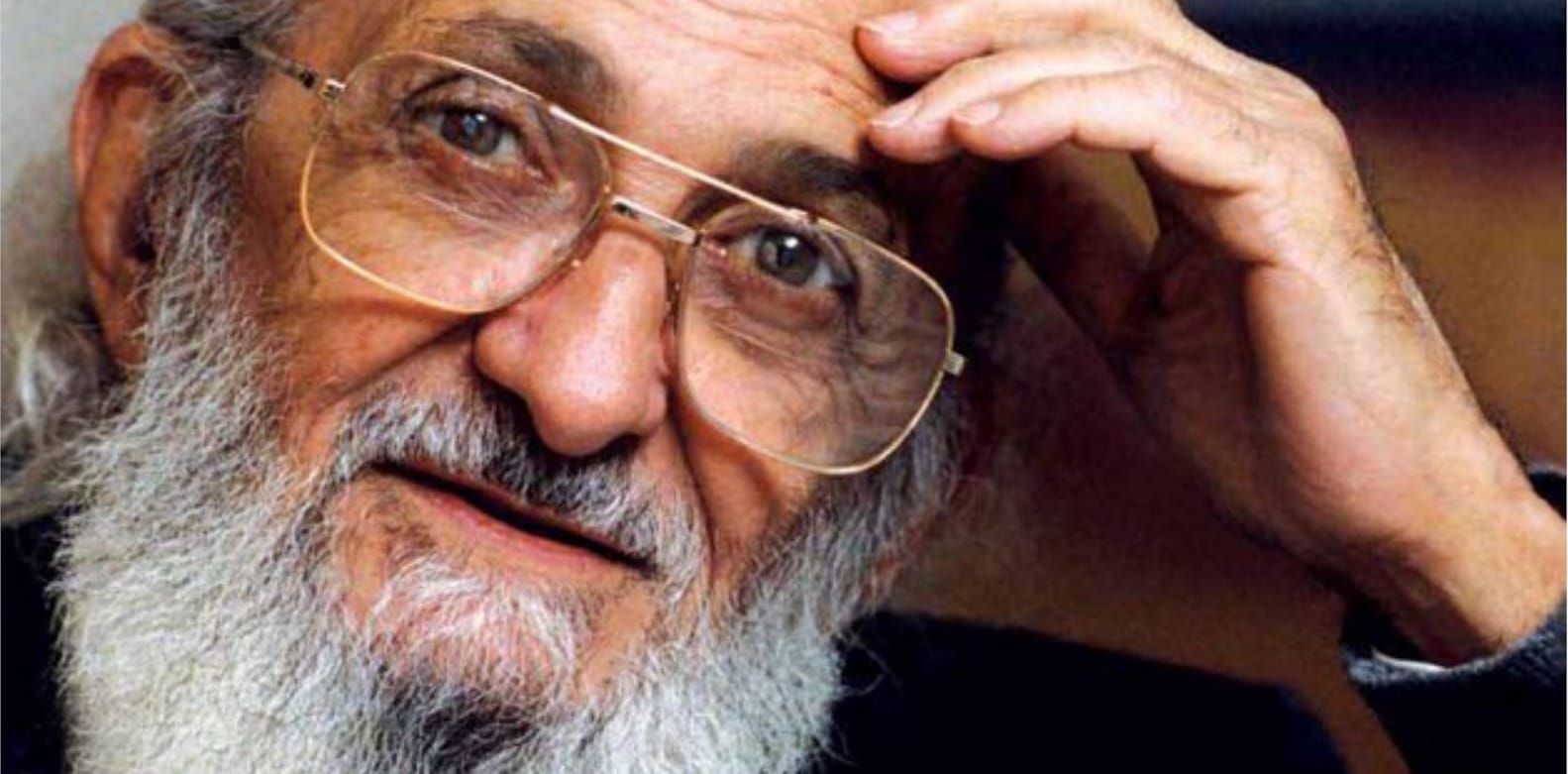
Most people mistook my work with Hybrid Pedagogy and Digital Pedagogy Lab, the pedagogical work I did around the world, the dialogues that that work inspired, the ideas that it challenged, as something I undertook to change education; or to become an authority in the field; or to build reputation and influence. One coworker at the University of Colorado Denver accused me of trying to be the equity police—”Equity doesn’t belong to you, Sean,” he said. As though the keynotes and workshops and events and publications and blog posts and interviews and podcasts were just my attempt to get a selfie with Paulo Freire.
All of which turned very ugly when I took a job at Course Hero, a company vilified by academics far and wide. Because now the story of my trajectory could be revised. My pedagogical work could be dismissed as spinning on those axes of reputation and influence… in order for me to arrive there, at an edtech company with a quarter-million dollar salary where everything I ever said or wrote could be read as irony.
But the work I was doing—and I said this often when I said my work was not about digital but about people—was the same work I’ve always done. The same work I did as a creative writing teacher in a classroom before the internet happened to teaching. The comfort and repair I offered as a massage therapist; the succor I tried to give as a spiritual counselor. And the work I did as a manager and coworker at Course Hero. The only honest work I know: providing a shelter, a moment or hour or week or semester of protection from cruelty.
Teaching was an accidental path for me. It made sense at the time. I had loans, I had child support to pay. A degree in creative writing wasn’t going to buy me groceries. And when I started teaching, I saw how no one in education is ever good enough—not students, not teachers, not staff, not administrators, not instructional designers—and everyone is told they must be better, that they must compete against each other and, more horribly, against themselves. There’s always another test, another level to achieve, a stronger reputation, more influence. And for even the most progressive in the field there is an “us” and a “them,” a right way to be a good teacher (person) and a wrong way.
It’s a field rife with cruelty and self-cruelty. I saw critical digital pedagogy as a means toward reprieve for the educators I wanted to serve.
Last year, after I’d been laid off along with so much of Silicon Valley, I tried to start a new endeavour—the Lab for New Teaching—which was meant to renew my pedagogical work. When I did, a once upon a time colleague wrote to me and said “I disagreed with a decision you made" (my lapsarian Course Hero moment) "but I’m glad you’re back.” But it didn’t feel like a welcome, not even for the prodigal I’d become. It felt like a judgement: you did something wrong, but there’s a chance to make it right (and, moreover, I will decide if you do). I realized then that I didn’t want to dig out my selfie with Paulo Freire, even if the past has as much gravity as the present.
Today, I work for a non-profit that supports systems that help students complete college. The organization has a ways to go before it escapes the gravity of the present; as a non-profit, it’s very academic. There is a perpetual scrabble for grants, a concern for IP, and also a desire to do worthy work. I see a reflection of 2005 in the faces I work with.
But I no longer feel an urgency to provide my colleagues with shelter. Instead, I am seeing therapists, receiving medical treatments for treatment-resistant depression, trying to resist the dissociative effects of AI, walking.
And I have started to foster dogs. My celebrity friend had a weakness for his dogs, a gentle humanity that his fans rarely saw. The most honest work is that which preserves that gentle humanity—our humility, our kindness and self-kindness; and within which imagination—or dancing—is never lost in the mix.